Monday, October 29, 2012

Askewl dot com ? I never thought this fitness center i phone will be a ...

Folks here is a manufacturing unit revealed apple iphone 4 for assorted causes. The great majority with your list are living in places in which the iPhone 4 just isn?t but obtainable. A different massive group includes those who travel in another country greatly, and want to be capable of move to insurers structured within the countries they will visit. The following paragraphs will help potential users to pick a cell phone correctly designed with regards to desires in addition to make them aware ways to get the telephone triggered.
Why The Manufacturing plant Jailbroke unlock iphone 4 tutorials utilizes GSM
The 2 main mobile phone system systems globally are CDMA (Code Department Multiple Accessibility) as well as GSM (World wide Technique pertaining to Mobile phone Communication).These kind of technology is not necessarily suitable. Meaning a GSM configured phone can?t make use of a carrier making use of CDMA, along with the other way round.
GSM could be the prevalent technological know-how worldwide, accessible in in excess of 250 international locations plus areas, providing plan to over Three or more zillion folks along with delivering vacationers with mobile phone access almost in which they go. It really is used in European countries (where by this is the typical), Europe, the Caribbean, Latin The united states, Questionnaire, New Zealand, Africa, and far associated with Indonesia and also the Midst Far east. AT&T plus T-Mobile function GSM communities in america.
CDMA, whilst big in the us, supplies smaller world-wide insurance coverage compared to GSM.
An additional as well as regarding GSM phones is they make use of the hassle-free SIM cards, which in turn CDMA won?t. This allows you to, amongst other things, move mobile phones and SIM-based providers with less effort.
GSM setting thus remains your best option for a real ?world? cellular phone.
Which will Strap? Be certain Which has a Quadband World GSM apple iphone 4
Not just any kind of GSM mobile phone will perform the. You can find three GSM jewelry applied all over the world: Eight hundred fifty, Nine hundred, A single,400, plus Just one,900MHz.
United states employs the actual 850MHz as well as A single,900MHz companies. In comparison, European countries, works by using the actual 900MHz as well as One,800MHz jewelry.
To be able to use a cellular phone that may work with essentially the most nations possible, you need to ensure that your mobile phone handset is definitely Quadband (GSM 850/900/ Just one,800/1,900MHz).
Reducing Issues Right down to Dimension ( blank ) Sim card to help MicroSIM
The apple iphone 4 works with a MicroSIM, as well as a usual Sim would not wear the particular cell phone?s SIM slot machine. You will need to cut your Sim into MicroSIM dimensions. It is quite easily carried out, employing a Simulator used vinyl cutter, and that is economical as well as obtainable via internet vendors. Avoid the use of scissers!
Small Sim card Adapters allow any Micro sim card unit card to be played with with mobile phone models designed to use a complete dimension Simulator, therefore you don?t really need to unique a couple of Sim cards.
Most people collect lots of queries about your Manufacturer Revealed iPhone for instance; What is it? Exactly what is the diverse among an iPhone as well as a Manufacturing facility Revealed to you i phone? What type is more preferable? Can one even now jailbreak this? Easily replace our firmware edition must i drop our unlock characteristic into it? If I jailbreak it can I get rid of something? Just how much should it price? Do you think get it? Can Apple company accomplish international shipping on there? Which are the locations that have it?
In certain nations around the world there are certain legislation along with limits that does not permit Apple inc to offer i-phones which have been locked so that you can community cellular phone providers. These legal guidelines designed Apple come forth with an iPhone that will identified available in the market since Manufacturing unit or even Basically Revealed to you iphone 3gs, which is not 100% true, as this cellphone is not recently been fixed, it absolutely was made by Apple inc with no Sim rules so you?re able to utilize it by using almost any GSM Sim global.
Among the list of advantages of this particular mobile phone would it be matters not the number of times an individual replace, improve or even limit the firmware, it?ll even now work with every Sim worldwide, you can also however jailbreak the following iphone 3gs so you aren?t required to be worried about results your unlocking rank of your respective manufacturing area revealed to you new iphone 4. Yet apart from the undeniable fact that this particular new iphone 4 isn?t based to any precise service provider, and you will put it to use worldwide and never have to discover this, it truly is exactly like the locked apple iphone.
Manufacturing unit Revealed to you iphone 3gs is superior to any based i phone because of a pair of causes, a person its witout a doubt jailbroke which means you aren?t required to bother about opening them, and 2 you could get some new firmware type every time apple inc have a latest version along with your apple iphone will always be revealed.
After i talked about with the female at the shop, while I can pick the i phone with out a commitment, My partner and i nevertheless might not be able to utilize it over a circle other than AT&T. That had been a difficulty if you ask me much like me generally overseas in most locations wherever AT&T isn?t going to are present or seldom have got companions.
Don?t misunderstand me, I love AT&T and I possess a plan using them with yet another new iphone 4 that I am not necessarily about to unlock. Nevertheless i was still determined to open up one particular in my utilization abroad. My girlfriends in another country managed to get seem a fairly easy course of action. Receive an apple iphone and you may shell out a person that can open up the item in your case.
Therefore, briefly, my iPhone visited when camping rolling around in its removing the lock on vacation. The expense to help uncover it had been Thirty Bucks nevertheless the male explained they cannot do the item right now i needed to hold out. Because I are impatient, I made the choice to look into the idea over the internet as a substitute. Many solutions were there online totally free but none of them of those labored since i obtained the newest iphone 4 computer software release. I made the choice to penetrate any forking over web site alternatively and that is while i thought everything is solved!
Obviously it was not! My own cellphone continue to didn?t understand the latest Sim I personally introduced. My partner and i figured that I received tricked in a artificial web-site, thus i chose to analysis even more. For just a beginner, it was just like beginning a new can easily involving heats. Jailbreaking, fitness center, firmware, computer software, baseband, and all sorts of these phrases in which meant nothing to me plus looked like thus challenging ended up inside my face!

Source: http://askewl.com/i-never-thought-this-fitness-center-i-phone-will-be-a-trouble/

puxatony phil josh harvey clemons college football recruiting rankings ground hog day 2012 aaron carter black history month did groundhog see his shadow

Lost Soul: Fabricating or Recognising Separate Legal Personality


A similar development reached New Zealand in 2008 with the (non-corporate) Limited Partnership which is nevertheless ?a separate legal person?.

It also identifies and documents the history and development of the ?entity theory? of partnerships and other associations and their eventual adoption by legislation by US states for partnerships generally. The theory behind this development sees associations as natural and real entities that the law should recognise, rather than create as a state-sponsored legal fiction.

The long standing and recognised status of Scottish partnerships as unincorporated separate legal entities is also covered.

Traditional Artificial Legal Persons: Corporations
The traditional English legal classification of persons was relatively simple: in addition to individual natural persons there are unincorporated bodies of persons (mere aggregates), corporations sole and corporations aggregate. This can be seen from the definition of person in legislation, for example, the ?Resource Management Act 1991 :

?person includes the Crown, a corporation sole, and also a body of persons, whether corporate or unincorporate.?


Although unincorporated bodies such as general partnerships, trustees of trusts and other forms of association are not considered separate legal entities from their members, they are normally considered as entities for accounting purposes and are considered de facto legal entities that fall within the definition of ?person?. Such unincorporated bodies can nevertheless suffer some difficulty in owning property, contracting with outsiders, suing and being sued, administering changes in the shifting membership of the body, and the potential for unlimited personal liability for debts incurred by or for the body. English law has traditionally been inflexibly fixed on the ?aggregate theory? of partnerships and similar unincorporated associations and bodies, and has not adopted the ?entity theory.? The traditional solution to all these problems has been incorporation:

Corporations Meet The Tax Man
Of course if a corporation is a separate legal entity it is only natural to for it to be taxed separately from its members. The traditional platitude is that since corporations are creatures of the state they should pay taxes to the state for the privilege - and of course there is an element of truth in that: it does expose the original sin of the corporation in being the bastard offspring of the unholy union of private commerce with state power.

The additional legal personality of the corporation results in an additional layer of income tax: not only does the corporation pay tax on its income, the members of the corporation have to pay tax on the distribution of that income as dividends. This problem is referred to as double taxation. Of course the traditional way to tax separate legal persons is to define corporations and tax their income under the guise of a corporations tax. Because almost all business corporations are incorporated companies, the term ?company tax? rather than ?corporation tax? are used in many countries including New Zealand, but the definition of company in the Income tax Act 2007 is ?a body corporate? (YA1) and goes on from there to have various inclusions and exclusions that we will examine later.

Avoiding Taxation as a Corporation
The problem of double taxation of income derived through corporations can be avoided by structuring the entity through which the income is derived so that it is not taxed as a corporation, but rather as an individual, or as 2 or more individuals deriving shares of the income directly. There are 3 possible ways of doing this:
  1. Using the entity tax classification rules to structure the entity so that it is not a corporation for tax purposes,
  2. Using an election available under the tax rules to make a corporation be taxed as if it is not a separate entity, or
  3. Restructuring the tax system to eliminate double taxation of income derived through corporations. This can be done by a) exempting corporations from tax and taxing only the members and others on income derived from the corporation, b) taxing the corporation and exempting the members from taxation of the income when distributed, c) allowing a deduction to the corporation for dividends paid to members, d) allowing a credit to members against tax on dividends on account of the tax paid by the corporation.

With option 1., the legal structure of the entity is altered, with options 2. and 3. it is not. In New Zealand option 2. has been available since 1993 under the qualifying companies regime (now the Look Through Companies regime) and option 3. d) has been standard since 1989 under the imputation system. Unit trusts, the only significant non-corporate vehicle for the public to invest through in New Zealand, are included within the definition of ?company? for tax purposes and are taxed as companies in New Zealand. These factors have meant there has been little motivation or opportunity to use option 1. in New Zealand.

The US Limited Liability Company
The situation in the United States, however, has been quite different. The options described under 2. and 3. above have not been allowed or implemented, and so the problem has been more acute, and the entity classification rules have borne the brunt of the pressure. Because these rules are Federal, but the entities are mostly created or structured under State law, the State legislators have assisted in providing corporate-like non-corporate entities that can avoid classification as corporations for tax purposes, ultimately yielding the Limited Liability Company or LLC.

To help explain and confirm this development I now document the US Federal Tax entity classification rules and the US state legislatures response in creating the unincorporated Limited Liability Company (LLC). The rules and history are well explained by Kenan Mullis recent Special Report which I quote at length:

A business entity?s classification as either a corporation or a partnership is important for both tax and nontax reasons. Most fundamentally, a corporation provides for the limited liability of its owners, while a partnership does not. From the tax perspective, the income of a partnership is not taxed at the partnership level. Instead, the income is viewed as flowing through to the partners, and those partners are taxed on their shares of the partnership income, whether or not it is actually distributed. The income of a corporation, on the other hand, is subject to both a corporate-level tax and a tax at the shareholder level when that corporate income is distributed.

A. Pre-CTB [check the box] Regime

From 1960 to the passage of the CTB regulations, an entity?s tax classification as either a corporation or a partnership was determined by the multi-factor Kintner regulations, so named because they were a response to the Ninth Circuit?s decision in U.S. v. Kintner. The Kintner regulations enumerated six characteristics of a corporate venture:

? the presence of associates;

? an objective to carry on business;

? continuity of life;

? centralization of management;

? limited liability; and

? free transferability of interests.

Because the first two characteristics are common to both corporations and partnerships, the test turned on the remaining four factors ? an entity possessing three or more was treated as a corporation, two or fewer was treated as a partnership. While the application of the Kintner regulations was theoretically simple, in practice there was significant complexity and uncertainty (as well as significant opportunity for tax planning) in determining whether an entity possessed any given factor.

Putting additional stress on the multi-factor test was the rise of the limited liability company and limited liability partnership, which narrowed the distinction between partnerships and corporations by offering both limited liability and taxation as a partnership. State LLC statutes would typically provide for both limited liability and centralized management, but not free transferability of interest or continuity of life. As a result, the LLC would meet only two Kintner factors and, consequently, would be classified as a partnership for federal tax purposes. These entities amplified taxpayers? ability to effectively elect their federal tax status, and they provided this opportunity to a much wider population by virtue of greater simplicity and lower cost. After all 50 states enacted statutes permitting LLCs, an entity could choose to be taxed as a corporation by incorporating under state statute, or it could choose to be taxed as a partnership by organizing under, and tailoring operative documents to meet the requirements of, a state LLC statute.

B. Creation and Operation of CTB

Sensing the obsolescence of the Kintner regulations and concerned about the continued costs of entity classification for both taxpayers and the government, the IRS and Treasury issued Notice 95-14 in early 1995. Notice 95-14 recognized that LLCs had diminished the traditional distinctions between corporations and partnerships, which had provided the foundation for the Kintner regulations, and that taxpayers were able to

achieve partnership tax treatment with entities that more closely resembled the corporate form. As a result, the IRS and Treasury announced they were contemplating a move to an elective classification regime to replace what they viewed as an outdated, complex, and costly system that had become effectively elective anyway.

The result, effective January 1, 1997, was the CTB Treasury regulations under section 301.7701. Under the CTB regulations, domestic and foreign eligible entities are able to elect to be taxed as a partnership (or, if the entity has only a single member, as a disregarded entity) or a corporation for federal tax purposes. To be eligible, entities must meet three requirements:

? the entity must exist separately from its owners;

? it must be a business entity; and

? it must not be a deemed corporation.

The chief instances of deemed corporations are entities formed under state corporate statutes and foreign per se corporations, as defined by a comprehensive list in Treas. reg. section 301.7701-2(b)(8).


Although Mullis does not state so above, corporations formed under the domestic state legislation is also within the definition of a deemed corporation, as can be seen from this IRS form:

Corporation. For federal tax purposes, a corporation is any of the following:

1. A business entity organized under a federal or state statute, or under a statute of a federally recognized Indian tribe, if the statute describes or refers to the entity as incorporated or as a corporation, body corporate, or body politic.

...


So, to this day, a US entity must not be incorporated if it is to qualify for partnership or disregarded-entity US federal tax treatment. However, foreign corporate entities may elect partnership or disregarded entity status provided they are not on the list of per se corporations (which isn?t being regularly updated). Nevertheless, several non-US jurisdictions have enacted various forms of LLC statutes that are closely modeled on the popular US versions, and do not have corporate status (these would not be defined as corporations for US tax purposes even if they were domestic entities). These include the Cook Islands (Limited Liability Companies Act 2008), Samoa, Nevis and Belize (International Limited Liability Companies Act 2011).

US Partnerships
As with LLCs, US State legislators have imported the separate legal entity concept into the partnership context, including for general partnerships, limited partnerships (LP), and the further US innovations the limited liability partnership (LLP) and limited liability limited partnership (LLLP). As general partnerships are not required to be registered or approved by the government to be formed, this separate legal entity status is treated as being innate rather than conferred by the statute as such. The statute can be fairly said to recognise rather than create the separate legal entity status, although it does so by displacing the historical English common law ?aggregate theory.?

The movement to recognise separate legal entity status on associations, regardless of corporate status, had some influence in 1902 when the first Uniform Partnership Act was being drafted, however, the proponents of this approach did not prevail at at that time:

The National Conference of Commissioners on Uniform State Laws first considered a uniform law of partnership in 1902. Although early drafts had proceeded along the mercantile or "entity" theory of partnerships, later drafts were based on the common-law "aggregate" theory.


Economist David Gindis?s paper ??From fictions and aggregates to real entities in the theory of the firm? discusses and documents the legal theory and movement mentioned above that would result in native recognition of separate legal entity as ?natural? and ?real? rather than imposed legal fiction:

This paper argues that the two dominant economic perspectives on the firm, namely the ?nexus of contracts? (Jensen and Meckling, 1976) and the ?collection of assets? (Grossman and Hart, 1986) views, are variations on the same theme. These are ?fictionalist? and ?aggregationist? positions that rely on one of two moves: they either deny the existence of the firm by regarding it as a legal fiction and/or a shorthand form of expression, or they reduce the firm to an aggregate of its parts, be these contracts, individual owners of resources or nonhuman assets. In both cases, firms and similar social entities are said to be ?nothing but? aggregates of these parts. Furthermore, despite the fact that the legal personality is important in both accounts, everything is said to be achieved by private contract alone and the law?s role in creating legal entity status is not considered. Dissatisfaction with these views has prompted a search for new foundations for the theory of the firm (Blair, 1999; Zingales, 2000).

Although rarely acknowledged by economists, both views are modern revivals of old theories of the corporation that have been recurring in a cyclical fashion for many centuries (Avi-Yonah, 2005). ?Fiction theory?, which dominated Roman law and medieval debates, regards corporations as simply names or imaginary legal persons that are nothing more than the individuals composing them. ?Aggregate theory?, popular in the second half of the nineteenth century, is a variant of fiction theory that holds that corporations are simply aggregates of natural persons, usually shareholders. However, examination of the legal literature reveals that an alternative ?real entity theory? dominated debates from roughly 1900 to 1930. On this view, the corporation is neither a fiction nor an aggregate but a non-reducible real entity. Interestingly, Blair (1999) suggests that this forgotten view can provide new foundations for the theory of the firm. We follow this suggestion in this paper.


Later in the paper Gindis shows how separate legal entity status can be (or should be) applied on a functional basis to all associations, as a type of customary law, rather than in deference to statutory commands:

The business corporation is traditionally distinguished from unincorporated business forms such as partnerships by its separate entity status. However, in the United States at least, the Revised Uniform Partnership Act of 1997 explicitly defines a partnership as ?an entity distinct from its partners? (?201a). More generally, today?s new business entities combining aspects of both corporations and partnerships (limited liability companies, limited liability partnerships, limited limited liability partnerships) have made standard differences less obvious. Accordingly, discussions of legal entity status have shifted from corporations to most forms of business companies. Hansmann et al. (2005: 13) thus hold that new business forms are ?generalizations? of the corporation, and Blackwell (1999) and others have called for a ?unified business entity code? applying to most if not all legal forms of the firm.

These developments reinforce the relevance of real entity theory that applies to the firm in general and underlines the creation of legal entity status as an important role of the law.

?

For early entity theorists, the terms ?real? and ?natural? were equivalently used to oppose the then conflated terms ?fiction? and ?artificial?. ? all entity theorists regarded corporations and similar groups as real socioeconomic entities ?

According to Dicey (1905: 154), ?whenever men act in concert for a common purpose, they tend to create a body which, from no fiction of law, but from the very nature of things, differs from the individuals of whom it is constituted?. Given this concerted action and common purpose, Brown (1905: 369) argues, ?the group becomes, or tends to become, a unit . . .A mere sum of individuals as such can no more become a unit than a heap of sand can become a statue?. In this spirit, one of the clearest statements made by entity theorists is Freund?s (1897: 47) list of three ?salient characteristics of the body corporate: its unity, its distinctiveness, and its identity in succession?.

For Freund, if these features are in fact present in a given association, then one can speak of a real entity. The difficulty is to show how common purpose and collective action produce a level of unity, distinctiveness, and durability sufficient for the group to be a real entity without appealing to any literally volitional or moral features. It is important to notice that Freund, Dicey, and Brown clearly associate existence, identity, and unity of groups in general. Indeed, ?the inquiry is one which leads us on from the subject of corporations to the wider subject of human association in general? (Brown, 1905: 368).

Entity theorists repeatedly underlined the role played the law, claiming that the law should comply with the fact of the group?s socio-economic existence and attribute legal capacity to an already existing or a potential socio-economic capacity. Accordingly, Laski (1916: 422) argues that ?the entities the law must recognize are those which act as such, for to act in unified fashion is ? formality apart ? to act as a corporation?. Legal entity status attributed by the law unifies and reinforces the socio-economic capacity created by concerted action and common purpose. It thus greatly increases the possibilities of collective action. Many entity theorists were political pluralists who believed in freedom of

association, and the increasing legal recognition of various groups (associations,

trade unions, political parties) sat well with their theory.


It is clear from the above that separate legal entity status need not derive from incorporation under statute, or from other statutory provisions, but as practical accommodations to voluntary associations, and viewing the role of the law as facilitative and responsive to the varied and dynamic forms of association in a civilised society, rather than a rigid doctrinally-conformist ontology system.

As noted by Gindis above, US partnership law has now shifted from the ?aggregate theory? to the ?entity theory? (although both theories apply in different contexts for the purpose of US Federal tax law):

In January of 1986, an American Bar Association subcommittee issued a detailed report that recommended extensive revisions to the UPA. See UPA Revision Subcommittee of the Committee on Partnerships and Unincorporated Business Organizations, Section of Business Law, American Bar Association, Should the Uniform Partnership Act be Revised?, 43 Bus. Law. 121 (1987) ("ABA Report"). The ABA Report recommended that the entity theory "should be incorporated into any revision of the UPA whenever possible." Id. at 124.


The entity theory was eventually incorporated into the Uniform Partnership Act simply as:

Drafting comments explaining this provision also explain some of its history, purpose and effect:

RUPA embraces the entity theory of the partnership. In light of the UPA?s ambivalence on the nature of partnerships, the explicit statement provided by subsection (a) is deemed appropriate as an expression of the increased emphasis on the entity theory as the dominant model. But see Section 306 (partners? liability joint and several unless the partnership has filed a statement of qualification to become a limited liability partnership).

?????????????Giving clear expression to the entity nature of a partnership is intended to allay previous concerns stemming from the aggregate theory, such as the necessity of a deed to convey title from the ?old? partnership to the ?new? partnership every time there is a change of cast among the partners. Under RUPA, there is no ?new? partnership just because of membership changes. That will avoid the result in cases such as Fairway Development Co. v. Title Insurance Co., 621 F. Supp. 120 (N.D. Ohio 1985), which held that the ?new? partnership resulting from a partner?s death did not have standing to enforce a title insurance policy issued to the ?old? partnership.


Scottish Partnerships
The jurisdiction of Scotland remains distinct to this day within the United Kingdom. The differences in institutions arise from a number of differing influences including different customs, and a minor, indirect, Roman civil law influence. The difference I will highlight here is the treatment of partnerships as separate legal persons from their partners - a difference UK legislation has been required to address.

Under Scots law, a firm is a distinct legal person, whereas under English law, it is merely an aggregation of the partners. In 1707 the legislature of Scotland was merged with England?s. The Partnership Act 1890 simply accommodates the Scottish position, within Scotland at least, by stating: ?In Scotland a firm is a legal person distinct from the partners of whom it is composed ? ?

According to this source, ?In this respect, the [1890] Act was confirming a long-established principle of Scots law.?

The Companies Act 2006, sec 1173 confirms that, notwithstanding its legal existence separate from its partners, a Scottish firm is not a body corporate under Scots law, nor under UK law:
(1) In the Companies Acts?

?body corporate? and ?corporation? include a body incorporated outside the United Kingdom, but do not include?

(a) a corporation sole, or

(b) a partnership that, whether or not a legal person, is not regarded as a body corporate under the law by which it is governed;


The explanatory notes give the context and application to a Scottish firm:

The definitions of ?body corporate? and ?corporation?, and of ?firm?, are new in part. They clarify the position of corporations sole and of partnerships that are legal persons but are not regarded as bodies corporate (as under Scots law)

[emphasis added]


The NZ Limited Partnership
In 2008 the New Zealand legislature created a new species of non-corporate separate legal entity out of whole cloth: the New Zealand Limited Partnership. Since the government can create legal persons by incorporation and call them corporations or bodies corporate, it can also create artificial legal persons and not make them corporations. The classification of an entity as a corporation is as arbitrary as its incorporation in the first place.

Limited Partnerships under the Limited Partnerships Act 2008 are ?formed? rather than ?incorporated? whereas overseas limited partnerships are recognised as being ?formed or incorporated outside New Zealand.? (some overseas limited partnerships are incorporated and others are formed as unincorporated entities.) Nowhere in the Act does it refer to New Zealand limited partnerships as being incorporated, corporations, bodies corporate or any similar term, even though a limited partnership is a separate legal person created under the Act. One can only conclude that a New Zealand limited partnership is an unincorporated body notwithstanding that its existence is created under statute and it is a separate legal person.

This is reinforced by its tax treatment. It is excluded from being a company for tax purposes by the definition in YA1, provided it is unlisted:
company?


The definition of partnership includes a limited partnership:
partnership means?
  • (a) a group of 2 or more persons who have, between themselves, the relationship described in section 4(1) of the Partnership Act 1908:


Thus for New Zealand tax purposes unlisted New Zealand limited partnerships are treated as unincorporated.

The Limited Partnership Regulations 2008 also distinguish between a partner that is a body corporate and one that is an unincorporated overseas limited partnership for the purpose of defining the details that are required to be provided.

This is the only New Zealand example of an unincorporated artificial separate legal person of which I am aware. It should, however, be noted that the New Zealand legislation is not innovative in this respect, it follows the standard US pattern (which also applies to General Partnerships, Limited Partnerships (LPs), Limited Liability Partnerships (LLPs) and Limited Liability Limited Partnerships (LLLPs), rather than the UK pattern for its Limited Partnership (which has the same status as a general partnership (i.e. not a body corporate and not a separate legal person in England)) or Limited Liability Partnership (which provides limited liability to all partners and which is body corporate, but otherwise structured and taxed as a partnership).

Recognition of other Non-Corporate Separate Legal Persons in New Zealand Law
Some still hold the view that a corporation means a legal person separate from its members, and that all such separate legal persons must be considered corporations under New Zealand law. For example the Senior Solicitor at the Ministry of Economic Development last year wrote to me that:

if it is correct that a New Mexico LLC is a separate unincorporated legal person for the purposes of New Mexico law this does not mean that this is recognised under New Zealand law. Under New Zealand law, something is either a body corporate or an incorporated body of persons. ?

The Act and New Zealand law do not recognise, as far as we can see, the entity New Mexico law creates.

?

It appears that, according to ?53-19-10 of 2011 NMSA 1978, that a LLC is a body corporate as New Mexico's legislation states that "a limited liability company formed pursuant to the Limited Liability Company Act is a separate legal entity."

As a result, the Registrar is now satisfied that [a New Mexico LLC is a body corporate]


This view may be based on case law (Campbell v Scott [1995] 2 NZLR) that:

Speaking generally, corporate bodies are persons in law distinct and separate from their members; unincorporate bodies are not.


However, a closer look at this case shows that instead it found that unincorporated bodies may have separate legal personality, and that the second part of the generalisation does not hold to the extent this is otherwise provided for.

Firstly, this case confirms the position I detailed in my previous post ?What is a ?corporation??:

From the legislation we can therefore infer that corporations are expressly created, rendered or incorporated as such by or under an Act of Parliament or similar instrument exercising state or royal power (either in New Zealand or outside New Zealand).


Where these are absent, for example in the case of registered Friendly Societies, the resulting entity is unincorporated, as can be seen from the decision:

It was common ground that the society was not a corporate body. It was an unincorporated body with a fluctuating membership. Speaking generally, corporate bodies are persons in law distinct and separate from their members; unincorporate bodies are not. Legal personality can be conferred upon an association of persons only by Royal Charter or by Act of Parliament or by incorporation under procedures established by Parliament - viz the Companies Acts 1955 and 1993 and the Incorporated Societies Act 1908. Corporate bodies are either corporations aggregate or

corporations sole.

?

The Act does not expressly confer on a friendly society corporate status. There is no provision giving friendly societies perpetual succession or the right to use a seal, these being two conventional indicia of incorporation: see Williams v Hursey (1959) 103 CLR 30 at pp 52 and 54.


Secondly, the case confirms that a body may be a separate legal entity from its members without being a body corporate. This can be seen from the ways listed above for gaining separate legal personality: i.e. not only ?by incorporation?, but alternatively ?by Royal Charter or by Act of Parliament.?

The judgement also held:

An Act of Parliament may either expressly or by necessary implication treat an unincorporated society as being a legal entity distinct from its members, either generally or for specific purposes.


Although the judgment applied a range of oblique references to friendly societies acting or being treated as if they were separate legal persons, in order to imply that they gained some extent of separate legal entity status specifically thereby, this legal theory is neither the only possible solution to the issues at stake, nor the best solution in that case. The more obvious alternative would be to consider friendly societies as trusts for unincorporated associations of persons: section 28 requires the appointment of trustees who are referred to as doing acts (and not as agents) and section 29 vests the property in them. Any obligations on contracts made by such a society?s officers appear to be claims on and are payable out of the trust funds, and are unlikely to extend further than that. In fact, the Society and the trustees do not even have the power to enforce payment of membership dues (sec 38), so the only funds a Society and its trustees can obtain, in that capacity, is the funds already held (other than an exception listed in 56 (3)). It is only if there is a deficiency in those funds that the questions arise of whether the liability extends to the trustees? personal estates, and whether the trustees have any rights of indemnity from the members of the society. The limits on recovering subscriptions from members has already been detailed as extremely limited. Recourse to the personal estates of trustees can and should prudently be expressly excluded in contracts and in the trust deed or society rules, and even absent such express terms, such terms could, and probably should, be implied (from this judgement, Tipping J would have implied such a limit should he have used this analysis).

Notwithstanding my quibble with the theory employed, the judgement clearly states that the Legislature can create separate legal entities that are not corporations. It has clearly done so with the Limited Partnerships Act 2008, and there is no reason why entities created under overseas legislation should not be recognised as valid under New Zealand law.

The Income Tax Act 2007 recognises the following possible types of entity that may have legal existence separate from that of its members:
  1. Bodies Corporate:
    1. Incorporated in New Zealand
    2. Incorporated elsewhere
  2. Other (i.e. unincorporated) Entity:
    1. Created in New Zealand
    2. Created Elsewhere

This can be inferred from the definition of company, as meaning:

?a body corporate or other entity that has a legal existence separate from that of its members, whether it is incorporated or created in New Zealand or elsewhere?


So it appears we have, like the British in 1890 with the Scottish partnership, at least implicitly recognised unincorporated associations with legal existence separate from that of its members as valid.

Source: http://www.lostsoulblog.com/2012/10/fabricating-or-recognising-separate.html

monta ellis election results wiz khalifa taylor allderdice mixtape reggie wayne taylor allderdice vincent jackson vicki gunvalson

1 Comment - Yeshiva World News

Shas? solution to the party?s leadership crisis, the forum of three, has earned an envious spot in the weekly chareidi newspapers and magazines in Eretz Yisrael. Shas? own Yom L?Yom does not play modest, allocating significant real estate to tell the story and share the success, including the array of rabbonim whose photo appears alongside their bracha on the success achieved by Maran HaGaon HaRav Ovadia Yosef Shlita. The paper actually explains in depth that the credit for saving the party goes to Maran?s youngest son, HaGaon HaRav Moshe Yosef, who heads the gadol hador?s Badatz Beit Yosef.

Rav Moshe?s efforts paid off big time in this case, at least for the time being, and the rabbonim who appear in the party-affiliated newspaper are not just Sephardim but prominent Ashkenazim including the Sanzer Rebbe Shlita, the Vishnitzer Rebbe Shlita and Chief Ashkenazi Rabbi Yonah Yechiel Metzger.

The Shas success begs the question if the Ashkenazim can achieve the same success, but with growing splits in the litvish and chassidic factions, such a reality appears unlikely at the present time.

(YWN ? Israel Desk, Jerusalem)

Source: http://www.theyeshivaworld.com/?p=142682

blake griffin dunk on kendrick perkins kendrick perkins steve jones emily maynard kola boof burmese python national signing day

What's the Most Helpful App You've Ever Used?

After my anti-texting screed last weekend, I came learn of and appreciate the wonders of MightyText, which is proving to wonderful. In this smartphone age, apps really do have the power to drastically affect (certain parts of) our lives. More »


Source: http://feeds.gawker.com/~r/gizmodo/full/~3/itvOrfZt_m4/whats-the-most-helpful-app-youve-ever-used

mario balotelli mario balotelli jenny mccarthy espn3 kevin youkilis Tropical Storm Debby legend of korra

Sunday, October 28, 2012

N.C. residents aghast over toxic drinking water

By Charlotte Huffman WNCN/News-17

WAKE FOREST, N.C. -- A Wake Forest community is in an uproar after learning the state of North Carolina knew a resident?s water had been contaminated with toxic chemicals and failed to alert other residents for more than six years.

?It makes me feel horrible,? homeowner Michele Hamilton said of unknowingly giving the toxic water to her kids. ?They?re the most important things to me.?


The EPA called families in the community this past summer, saying their water is contaminated with a cancer-causing chemical called trichloroethylene, or TCE, and to not drink, bathe or cook with the water.

?I remember where we were when we got the phone call - we were on vacation this summer with our family,? Hamilton said.

Neighbors Monica Stonefield and Frances Cuda got the same call.

?Of course we were frightened and scared,? Stonefield said.

?I was very nervous,? Cuda said. ?I think anybody would be.?

Within days of the calls to homeowners, the EPA set up an emergency command post and placed safe water on their doorsteps regularly. The EPA installed water filters in the homes with contamination levels above the EPA?s safety standard. And the EPA called a community meeting to explain what neighbors had been drinking.

Gerald LeBlanc, the head of N.C. State University?s Department of Environmental and molecular toxicology, said TCE is a chemical that cleaning industries have used for years to remove grease. It is cheap, highly effective ? and very toxic.

?Based upon animal studies, we know that it has the ability to do harm,? LeBlanc said.

LeBlanc said TCE ?has been known to cause cancer? specifically leukemia, breast cancer, lung cancer, and there are symptoms associated with TCE exposure that are like Parkinson?s disease.

Cuda said she has Parkinson?s disease. She also said she has gotten cysts, including ?a lot of them in this left breast.?

Doctors have not confirmed it, but Cuda believes the development of many large cysts in her left breast and having Parkinson?s disease is due to TCE.

Cuda said a neighbor died from breast cancer. ?And you know, she was a lovely person,? Cuda said. ?She was in her 50s.?

The problem dates back to 10 years ago, where circuit boards were cleaned with the toxin inside a shed on Stony Hill Road in Wake Forest. The TCE exited the building through a pipe and poured straight onto the ground. About three years later, the chemical showed up in a well at the house next door.

At the North Carolina Department of Environment and Natural Resources, Charlotte Jesneck?s division took the case.

?It looked to be that the contamination was confined to that well,? Jesneck said.

So in 2005, DENR moved on.

Through a Freedom of Information Act, NBC-17 obtained 800 pages from DENR?s files. Inside those pages, NBC-17 found dozens of red flags, including a two-page summary sent from DENR staff to senior managers in 2008 saying, ?There are other wells along Stony Hill Road that should be sampled to check their status.?

Also in 2008 was a DENR letter, where the department admitted ?the extent of the contamination has not been defined.?

Larry Kusan is an engineer and resident living near the contamination. In 2008, he learned about the contamination that happened in 2005 and was concerned about the potential for the contamination to spread.

?I wanted to make sure that my family wasn?t in trouble,? Kusan said in an interview. ?Our home is about a mile away from that location.?

Kusan said he was ?shocked? by what he found.

He wrote DENR and the governor?s office, saying, ?The area is slated for significant expansion.?

He noted, ?It is the cost to human health that is of greatest concern.?

He then demanded the situation be addressed, or said, ?It will result in harm to some residents, current and future.?

DENR admits those warning sat in their files for years because they were focused on ?bigger issues.?

Kusan called that a ?missed opportunity.?

While the contamination problem brewed underground the area became a popular residential community with several new housing developments.

One resident, Stonefield, said, ?We moved here to make a better life for our family.?

Asked if DENR ever notified them of concerns, Stonefield said, ?Never.?

Cuda, too, couldn?t remember any official notices about the problem.

Environmental engineer Jim Halley said it is reasonable to assume TCE will spread. TCE sinks because it is heavier than water and when it sinks into the groundwater it spreads through the water table and into nearby wells.

?And that?s when we really start seeing problems with groundwater and drinking water contamination,? Halley said.

DENR?s Jesneck, asked about TCE sinking and spreading, said, ?There were higher risk sites on the radar at that time,? and they hoped it wouldn?t spread.

The first time many neighbors learned of the contamination was this past June when DENR sent some neighbors a letter asking if they would like to have their wells sampled.

?That?s not good enough,? Frank Cuda said. ?You bring someone up in uniform, in a vehicle that you know represents them who says, ?Excuse me. There is an emergency. I need to test your water.??

DENR called in the EPA for help.

More from News-17: Cleaning up toxic mess will cost taxpayers

By late August, the EPA had sampled about 100 wells. They found the TCE contamination had spread from the source nearly 500 acres and contaminated the wells of 21 families in the area.

Mark Stonefield?s well tested positive for dangerous levels of TCE contamination.

?I?m furious,? homeowner Stonefield said. ?I?m very upset about it.? That?s the biggest problem I?ve had with this whole situation is the state knew about it in 2005. We bought this land in 2007 and built a house on it in 2008 and our kids have been drinking the water for over 4 years now and no one notified us there was even the possibility that the water could be contaminated.?

Jesneck said, ?We have a finite number of resources.?

NBC-17 pointed out that it does not require any money to call residents and alert them about potential contamination in the area.

?If we had all the resources in the world, it would be a fantastic thing to do,? Jesneck said. ?But given the resources we are given, we have to work on the highest risk known problems first.?

Jesneck added, ?We had sites where people actually had detections in their water supply wells or living on contaminated soils. Those are higher priorities than people living near a contaminated site.?

But in the Wake Forest community, that answer is not good enough.

?I don?t care about funding,? said Cuda. ?All I care about is that someone starts doing their job in the world!?

Cuda pointed out that he drank the water daily for years.

?That?s a lot of poison to put in your body for all those years,? he said.

More from Open Channel:

?

Follow Open Channel from NBCNews.com on Twitter and Facebook

Source: http://openchannel.nbcnews.com/_news/2012/10/28/14728166-nc-neighbors-aghast-to-learn-drinking-water-contaminated-for-years?lite

deep impact usssa baseball alex o loughlin the godfather cape breton bowling green marysville

Established Autopilot Outsourcing Business Making 6K ... - Flippa

Hello,

?

For auction is a business which provides web development and mobile development services. All services are outsourced to other associated companies at half the value of project. This business is almost completely automated you just need to spend 1 hour in responding to mails. I will offer my continued service of running this business further for you for next 45 days with you. I will help you in running it and will be glad to help you anytime later too.

?

?

Introduction: We offer development services, all projects which we get in are from different sources which will be disclosed to the winning bidder and will be guided on how to get continued projects, all he need to do is spend 1 hour a day and 2 hours when you are getting a lot projects and earning a lot I?m sure you wont mind it when you are earning really good. Possibilities are end less and with my continued service of running this business for 45 days and making you expert in it is a real advantage of taking over this business. We have associated companies to whom we outsource the projects we receive. Lets say you received a android app development project for which you quoted $4000 and the same is outsourced to our partner company and we offer him $2000 to do the same. Our sources are really reputed and located in such areas where labour wages are really low so they can offer you real low pricing on your projects.

?

?

Reason for selling: I got admission in a reputed university to do my further studies, I?ve been trying to get in there from past 3 years and finally I got a call :). I will be joining in after 2 months or so but I want to clear it up till then so I can spend all my time in studying and deliver my 100% to it.

?

I wont mind helping you even after 45 days as this is what I love to do but that would be whenever I get free. To be honest this is really a good investment and will help you in making money for lifetime. Earnings will keep growing and you will have your own reputed business may be you start hating your day job after working on this as it is something like easy money. You get projects, outsource them, exchange few mails and done!

?

?

I have given all financial details and proofs, kindly check them out.

?

There is no reserve on this auction, so HAPPY bidding.

?

?

?

Whats all included in the sale?

?

?

# The sale includes domain name Androple.com registered at Godaddy, will be pushed to Godaddy account of winner.

?

# Website

?

# All resources of getting projects, outsourcing them and other required resources which I have gathered while running this business.

?

# My continued service of helping you in running this business and teaching you for 45 days.

?

# My support via e-Mail even after 45 days.

?

?

FAQ:

?

# Will I have to work a hour on it on fixed timing or anytime a day?

Ans: You just need to answer mails and visit few sites. So you can do it like 20 mins in morning, 20 mins in night or whenever you get free. If you work online then you can just visit whenever you get chance.

?

# Do I need to have any programming or marketing experience to run this business successfully?

Ans: No, you don?t need to have any programming or marketing skills or experience to run this business. You will just need to know few basic things which you will easily run within few days and I will be with you for 45 days to help you in running this business.

?

?

# Will I need to pay for advertising or any other expenses involved?

Ans: Other then hosting or domain there is no other expenses involved in running this business. Programmers are going to be paid out of the money you receive from clients for projects they send you. You will charge clients with 50% upfront and 50% on completion so on completion the 50% which you receive can be forwarded to programming company or you can just ask client to send it to them directly.

?

?

# Will I need to spend 1 hour a day daily?

Ans: Yes, I recommend you to spend a hour on it daily just a few times you can skip but often skipping it might result in dropping down earnings.

?

?

# How will I get paid from clients?

Ans: If you hold Paypal account then you should not be having any problem in getting paid. Most of the clients prefers Paypal.

?

# Why do you call it auto pilot when we have to spend hour a day?

Ans: Its just because this kind of business normally requires full time work to get projects and to get them done. With my methods and sources its almost auto pilot you just need to exchange few mails and follow some simple basic steps, even a kid can do it.

?

# Hey, I?m interested. Whats the reserve?

Ans: There is no reserve for this auction, minimum bid for this auction have been kept at $4000 and BIN is $25,000.

?

# I?m ready to BIN it right away, will I get any freebies?

Ans: I can add 2 premium domains I own.

?

# From how long you are into this business?

Ans: It been around 4 years but I started this site few months back only.

?

# Will the market for this business ever end?

Ans: There is no chance for this kind of business market to end, you will be able to run it smoothly till internet lasts lol :) There is no end and potential will just keep on increasing

?

?

# Is this for me?

Honestly speaking, this is not for people who are looking to make money by just investing. This business requires some work i.e. around a hour a day if you can?t spend this much time on this business then this is not really for you. If you are looking to take over a business which is making good money and have time to spend around hour a day then this is for you.

?

?

?

Before Bidding:

?

# This auction may end anytime so bid only if you have funds available.

# Only bid if you can pay via given payment methods.

# Ask any questions you might have.

?

?

Accepted Payment Methods:

?

# Escrow

# Western Union (If you can?t work with Escrow)

# Moneygram (If you can?t work with Escrow)

# Bank Wire (If you can send bank wire)

?

If any of this method doesn't work for you I can accept Paypal mass pay as lots of people recommended not to accept Paypal for large payments.

?

?

# How This Deal Will Work:

# Buyer creates Escrow for domain only as Escrow wont support domain with CONTENT for higher values and have lots of restrictions.

?

# Once the Escrow is created I will push the domain to Godaddy account

?

# Buyer releases the Escrow

?

# Once it is released I will process transfering all files and help you in getting started with your NEW business :)

?

# After 45 days, I will quit from working on this and will provide e-Mail support whenever you require or live chat whenever I can be available.

?

HAPPY BIDDING

?

Get in touch via PM if you have any questions or need any information.

To express your interest to the seller, or post a public comment, you need to log in or sign up.

Listing details are copyright of the seller. The seller grants a permanent, irrevocable and unrestricted licence over the listing details to Flippa.

Source: https://flippa.com/2837034-established-autopilot-outsourcing-business-making-6k-monthly-great-opportunity

lra eric johnson eric johnson big east tournament ashley olsen new apple tv sun flare

Butlers, lunar rovers, snakes and airboats: the best of Carnegie Mellon's Robotics Institute

Butlers, lunar rovers, snakes and airboats the best Carnegie Mellon's Robotics Institute

How was your week? We got to spend a couple of days trekking around the Carnegie Mellon campus in Pittsburgh, PA to check out some of the latest projects from the school's world renowned Robotics Institute -- a trip that culminated with the bi-annual induction ceremony from the CMU-sponsored Robot Hall of Fame. Given all the craziness of the past seven days, you might have missed some of the awesomeness, but fear not, we've got it all for you here in one handy place -- plus a couple of videos from the trip that we haven't shown you yet. Join us after the break to catch up.

Continue reading Butlers, lunar rovers, snakes and airboats: the best of Carnegie Mellon's Robotics Institute

Butlers, lunar rovers, snakes and airboats: the best of Carnegie Mellon's Robotics Institute originally appeared on Engadget on Sat, 27 Oct 2012 12:45:00 EDT. Please see our terms for use of feeds.

Permalink   |   | Email this | Comments


Source: http://feeds.engadget.com/~r/weblogsinc/engadget/~3/OnNaHvXMJ-U/

rob the firm new york philharmonic marines urinating on taliban critics choice awards super pac dre kirkpatrick

Local Expert Gives Tips On Preparing For Flooding ? CBS Philly

Hurricane Irene rips through the area, damaging several properties, killing people and causing mandatory evacuations in some areas.

Hurricane Irene rips through the area, damaging several properties, killing people and causing mandatory evacuations in some areas.

By Pat Loeb

PHILADELPHIA (CBS) ? Whether Sandy scores a direct hit on our area or not, it is forecasted to bring heavy rain, which can be a headache for homeowners.

The most important thing to have in your basement, the experts say, is a sump pump, one with a battery back-up, recommends Bucks County emergency management coordinator John Dougherty.

?A lot of times with storms like we?re anticipating, there?s a power failure and if you have a sump pump and you don?t have power then it doesn?t work and that could make the difference between no water in your basement and a couple inches,? he explains.

Other things that will make a difference are making sure your rain gutters are clean and extending your downspouts well away from your home; at least 10 feet, says Dougherty.

?This would help prevent the water from seeping through the ground and going into your basement,? Dougherty says.

You might also consider flood insurance, in case all else fails.

Hurricane Sandy?Coverage

Source: http://philadelphia.cbslocal.com/2012/10/27/local-expert-gives-tips-on-preparing-for-flooding/

knicks strikeforce tate vs rousey ciaa the monkees strikeforce davy jones love actually

Financial Literacy for Law Students? - Credit Slips

NYU has created a bit of stir in legal education by announcing that it will start mandating a financial literacy course for all of its students. I think this is a fantastic move from a pedagogical angle, a career angle, and a public interest angle. ?Some thoughts on this below, as I think it relates in part to Credit Slips' larger discussion of finance and society. ?

Pedagogically, having a required financial literacy course has huge efficiency benefits.?Every 2L/3L business or tax law class spends some time covering basic topics (what?s a secured loan, what?s stock, how to calculate present value, what's a basis point, etc.). There?s a huge amount of unnecessary repetition. It?d be better to put it all into one basic concepts class so we could actually teach students more in the other courses.

Careerwise, fluency in basic financial concepts will make first year associates more useful for practices (transactional, regulatory, and litigation) that touch on anything financial. ?How much, I can't say, but in a tough legal employment market, I think it gives students with the background a leg up, both in terms of the value the bring to the firm (ability to communicate with clients, time saved not having to explain basic stuff, etc.) and in terms of their ability to have sophisticated conversations with job interviewers. ?As between two otherwise matched job candidates, I'd think the one with the financial literacy training has a leg up. ?Obviously this might make such a course a better fit for schools with a large percentage of graduates going to firm or regulatory work, but it's worth underscoring that financial issues aren't just about doing corporate deals. ?They arise in consumer law, family law, collection of judgments, etc. ??

From a public interest angle, I think mandating financial literacy is absolutely critical. ?The students we train in law schools today are the next generation of policymakers. ?We would never dream of graduating students who couldn't discuss procedural rights or civil rights in sophisticated terms. Yet we routinely graduate students who can't have an equally sophisticated discussion about economic and financial rights. ?

For faculties (like the Georgetown one) that believe they have a social justice mission (however defined), training students to be able to engage in economic justice conversations is critical.?Any sort of economic justice agenda has to start with financial literacy. Our failure to do so has had real consequences. ?My public law colleagues at Georgetown are terribly upset by the foreclosures and resultant?destruction of wealth in communities of color,?such as Price George's County, Maryland for example, but it's really not possible to understand the situation, much less do anything about it, without having a basic understanding of how mortgage finance works. ?We're not going to ever train students in the weedy details of securitization, but I would hope that the basic transaction structure would be something a financial literacy course might teach given its importance to financing an enormous share of consumer receivables. ?At the very least, ensuring that students understand the basics of a mortgage or secured loan would seems reasonable.

There is also another part to the public interest angle--financial literacy matters prophylactically in terms of shaping regulation. ?The field of financial regulation has long been ceded to those who work for financial institutions. ?2008 was the result. ?There have been a handful of lonely academic voices in the wilderness, to be sure. ?But if we want to avoid another 2008, we need more people to follow financial regulation than just those working for banks. ?I want to emphasize that this isn't a right vs. left issue. ?This is a public interest issue. ??Given the special status of ABA-accredited law schools for bar admission in many states, I think there's a duty to ensure our graduates are able to be part of the economic regulatory debates, not just those on social or procedural rights.?

There are all kinds of practical questions about how and where to put a financial literacy class into the curriculum (a problem my business law colleagues at Georgetown and I haven't solved) and what should be taught in the class, but conceptually I think it is long, long overdue. ?And unlike legal philosopher Brian Leiter?(and here), I have no problem with mandating such a class. We mandate all kinds of other things in the 1L curriculum, and we also decide what to teach in the elective courses. ?A basic finance course strikes me as equally important as a basic regulatory state class and a basic international law class, both of which are now often part of the mandatory 1L curriculum. Indeed, if the problem is with relevance of mandated classes, why include criminal law? Most lawyers are never going to be involved in a criminal case. There are good pedagogical and public interest reasons for mandating these classes and no one blinks an eye at it. ?

Does it annoy students to have mandated classes? ?Sure, just like they're annoyed at having 3 years of classes instead of 2. ?I had no interest in contracts before law school, was pissed I had to take it. Luckily, I had an amazing teacher who got me to see what was interesting and valuable about the course, and now I teach the contracts. So, I'm sold on mandatory educational brocoli. (One could have a test-out option, but that's a detail.) In any case, I doubt students will select schools based on whether they are required to take a single class. ?

A final aside: ?I hate the term "financial literacy"--it smacks of the kind of consumer education classes that the financial services industry has pushed as a way of avoiding substantive regulation, and which Lauren Willis's work has shown is of questionable value. ?I'd rather just think of this as "Finance for Lawyers" or "Financial Concepts". ?A finance course for lawyers is a different thing altogether than teaching consumers not to overspend. But that's an aside. ?It's a great idea. ?Good for NYU for doing it. ?

Source: http://www.creditslips.org/creditslips/2012/10/financial-literacy-for-law-students.html

mall of america mennonite smokey robinson smokey robinson pulmonary embolism packages camila alves

What is the most dangerous submission hold in WWE? UFC fighter Chael Sonnen weighs in!

Chael Sonnen

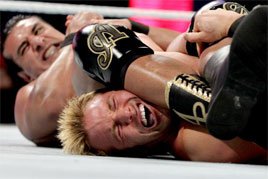
Unfortunately for Randy Orton, the answer to this question ? what is the most dangerous submission hold in WWE ? is the Cross Armbreaker.

The answer comes from a 15-year mixed martial arts (MMA) veteran who is currently the No. 1 contender to Jon Jones? UFC Light Heavyweight Championship, the charismatic and controversial Chael Sonnen.?(@sonnench on Twitter)

Sonnen, a former NCAA Division I Wrestling All-American from the University of Oregon, is familiar with Alberto?s amateur wrestling and MMA accomplishments. The Mexican Aristocrat?s record of mat mastery includes being on the Mexican National Greco Roman Wrestling Team. He would have also competed in the 2000 Olympic Games if Mexico hadn?t been forced to forego a wrestling team due to lack of funding. Wrestling professionally was in Alberto?s bloodline as the son of Dos Caras and nephew of Mil Mascaras. It?s safe to say his career choice was indeed his destiny.

With unfinished business in amateur wrestling still on his mind because of not competing in the Olympic Games, Alberto decided to juggle his professional wrestling career with MMA by competing in Mexico, Spain, Honduras and Japan, amassing a winning record of 9-5 before lacing up his wrestling boots for good. Alberto has been most successful as a WWE Superstar, winning the most prestigious title in the industry?s history, the WWE Championship, twice.

Being surprisingly familiar with WWE submissions, probably because of his friendship with WWE Champion CM Punk, the man referred to by many UFC fans as, ironically, ?The People?s Champ? weighed in.

Alberto Del Rio applies the Cross Armbreaker

?Punk is a submission whiz who trains with former UFC fighter, Shonie Carter in Chicago. Punk even has a gym in his basement now,? Sonnen said. ?He likes the Anaconda Vise. The Undertaker uses the gogoplata [known to WWE fans as Hell?s Gate]. The Figure-Four Leglock will crush a knee, but it is very intricate and difficult to set up. The standing Abdominal Stretch is applied on the ground in MMA and called a Twister. Again, it?s very difficult to set up, but brutal to be in. Alberto?s Cross Armbreaker is known as an armbar in MMA and it is a staple of every fighter?s repertoire.?

Though Alberto?s submission hold appears simple, a competitor would be na?ve to underestimate any variation of an armbar.

?The armbar is very basic,? Sonnen said. ?Anything that really works at high level competition is basic. It is really hard to stop somebody who is using their full body against your one joint. An armbar is one fighter using his arms, legs and hips to apply pressure on an elbow.?An armbar can be applied quickly and effectively from almost any position. I tapped out to an armbar quickly twice yesterday in training. There is a point of no return with an armbar where there is only one centimeter more before the elbow breaks. You can tap out or spend six months recovering from surgery.

?The very first time I saw an armbar, it was demonstrated by 1984 Olympic Freestyle Wrestling Gold Medalist Mark Schultz,? Sonnen added. Mark and his brother Dave are the only siblings to both win Olympic Gold Medals and World Freestyle Wrestling Championships, the latter of which when they defeated the Soviet Union?s grapplers who boycotted the 1984 Olympic Games in Los Angeles during the Cold War.

Randy Orton vs. Alberto Del Rio?To make a point, Mark put a two-by-four between his legs and instantly snapped it,? Sonnen said. ?The point that he was making was how effective the armbar is. When you trap anything between your arms and legs and elevate your hips, you will break it. Besides being so basic and so effective, it can be applied quickly from almost any position.?

So while The Viper can strike at any time and any place with the RKO, the same can be said for the application of Alberto?s Cross Armbreaker. What this means is that no matter how long their sure-to-be-a-clinic match at Hell in a Cell lasts, the end will come suddenly for one of these two Superstars.?(MATCH PREVIEW) (WATCH: A LOOK AT THE DEVASTATING CROSS ARMBREAKER)

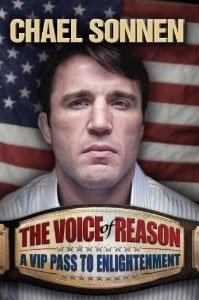
Chael Sonnen is the author of ?The Voice of Reason: A VIP Pass to Enlightenment.?

View Comments

Source: http://www.wwe.com/shows/hellinacell/chael-sonnen-picks-most-dangerous-submission-hold-in-wwe

pi white lion mike d antoni resigns holes ncaa brackets 2012 odd lamar

Saturday, October 27, 2012

Simulation and Software Radio for Mobile Communications By ...

Simulation and Software Radio for Mobile Communications By Hiroshi Harada And Ramjee Prasad
Title:?Simulation and Software Radio for Mobile Communications By Hiroshi Harada And Ramjee Prasad

Description:

This cutting-edge, first-of-its-kind resource gives professionals a comprehensive understanding of the simulation and evaluation methods used in the design and development of today's mobile communication systems. Written by two highly regarded experts in the field, the book defines and presents several simulation tools that are extremely valuable to mobile communications engineers and researchers.


Size:?18.2 MB

No. of Pages: 263

Type:?Text Oriented

Download Link:
Simulation and Software Radio for Mobile Communications - FilesFlash Download Link

Similar Books: Communication n Networks

To download the index of complete books and link, click here we will help you. click here

If you are having trouble with downloading the books, pleaseclick here we will help you. click here

If you cannot download the file or if the file has been deleted due to copyright issues, please click here we will help you. click here

Please 'Say Thanks' ( by writing comments ) if you like my effort. Encourage Me.

Source: http://books4career.blogspot.com/2012/10/simulation-and-software-radio-for.html

hunger games Ronda Rousey Joey Kovar Expendables 2 Pussy Riot National Hurricane Center Zeek Rewards

US Steel's 3Q results expected to drop

PITTSBURGH (AP) ? United States Steel Corp.'s third-quarter results Tuesday should shed some light on the appetite for steel in the sluggish global economy.

WHAT TO WATCH FOR: The Pittsburgh manufacturer warned investors in late July that slower global growth could be a drag on third-quarter results.

Steel manufacturers have coped with anemic demand for much of the year because a number of key customers cut purchases, such as the construction industry. Globally, manufacturing has been weak as the economies of the U.S., China and some emerging countries grew more slowly and Europe's debt problems have put some countries in that region into recession.

Meanwhile, new production at U.S. steel plants along with imports have created plentiful supplies.

In this environment, U.S. Steel expects operating results to be positive for the July-through-September quarter but lower than the second quarter. Overall average prices also are expected to be lower.

JPMorgan analyst Michael F. Gambardella said demand deteriorated for flat-rolled steel, which is used in products such as automobiles and other transportation vehicles, construction and appliances. He predicted that both volumes and prices would be lower as a result.

U.S. Steel's European division was pressured by economic problems in the region but sales of steel pipes and other products to the energy industry should remain steady, Gambardella wrote in an Oct. 17 research note.

Shares of U.S. Steel fell 7.4 percent during the quarter, ending at $19.07 per share on Sept. 28. In the first nine months of the year, the price dropped nearly 28 percent.

WHY IT MATTERS: U.S. Steel, which is based in Pittsburgh, makes products used in various industries from construction and automobiles to appliances and pipes for the energy industry. The pace of economic growth can be gauged in part from the sales that it makes to its broad customer base.

WHAT'S EXPECTED: Analysts, on average, expect break-even results on a per-share basis and revenue of $4.64 billion, according to FactSet.

U.S. Steel has said it will take a pretax charge of about $35 million related to the financial impact of its new three-year contract with the United Steelworkers.

LAST QUARTER: U.S. Steel reported net income of $22 million, or 15 cents per share, in the third quarter of 2011. Revenue totaled $5.08 billion.

Source: http://news.yahoo.com/us-steels-3q-results-expected-drop-220321698--finance.html

Carlton Morgan Freeman Dead Stand Up to Cancer Azarenka NFL fantasy football Chris Kluwe Jennifer Granholm

Video: Maria's Market Insight: Better Earnings Today

Sorry, Readability was unable to parse this page for content.

Source: http://video.msnbc.msn.com/cnbc/49573960/

NBC Olympics NBC Olympics schedule Alexa Vega 2012 Olympics Chad Everett London Olympics Kristen Stewart Rupert Sanders Photos

Wedding Flower Packages: The Best Way To Opt For The Correct ...

You are here: Home / Anniversaries / Wedding Flower Packages: The Best Way To Opt For The Correct One For The Wedding Day


?

Your wedding day is possibly one of several most important days of your life and it truly is vital that you simply strategy each and every bit of detail for that specific day. Apart from arranging for the caterer along with the location of the occasion, it?s also essential that you also take time arranging for the wedding flower packages.

?

Flowers usually are not only employed to decorate the wedding location and reception. In fact, they?re as critical as wedding rings and that any wedding won?t be full with no the bride carrying a stunning wedding bouquet. This really is the reason why it truly is so vital which you discover an proper florist that will supply you with good wedding flower packages.

?

There are many florists that present distinctive floral arrangements to couples therefore discovering the proper one might be difficult thus narrowing down your search to a handful of florists will unquestionably assist you to uncover the right one that may do all floral arrangements for the wedding. When searching for a florist, it is crucial that you simply look at the type of packages that they offer. The wedding day requires diverse sorts of floral arrangements and it?s vital that your florist delivers complete wedding flower packages.

?

When on the lookout for a florist, it can be vital that you simply hunt for these that may not merely make you floral centerpieces and your bouquet but may also make other wedding particulars that involve flowers like buttoners for? the guests. Yet another factor to take into consideration when hiring a florist is the fact that they must have the ability to provide a wide array of flowers for their wedding flower packages. Then again, due to the fact not all flowers are in season all year round, it is actually crucial that the florist can deliver the closest option to make their floral arrangements.

?

Flower shops that provide flower packages to couples also should give competitive costs for their clients. In case you do not have enough budget for the wedding, you don?t ought to skimp on your floral arrangement. Search for flower shops that will function with your spending budget but nonetheless offer you the most beneficial floral arrangement that you simply can afford.

?

Flowers set the mood in any wedding ceremony and it really is essential that you opt for the ideal wedding flower packages for the large day. By having the top flower arrangement for the wedding, you will be in a position to generate your wedding very memorable for the years to come.

?

It?s essential to go for wedding flowers ayrshire as well as wedding flower packages at any moment to participate in weeding party.

?

?

Source: http://www.theyellowads.com/relationships/wedding-flower-packages-the-best-way-to-opt-for-the-correct-one-for-the-wedding-day/

westminster bonnaroo 2012 lineup twisted metal sea lion si swimsuit 2012 westminster dog show abe lincoln vampire hunter

Friday, October 26, 2012

Great expectations for US economy: Are Obama, Romney too optimistic?

Mitt Romney and President Obama both present to voters rosy views of future economic growth. Those scenarios aren't impossible, but it's fair to attach some big asterisks to them.

By Mark Trumbull,?Staff writer / October 25, 2012

President Obama and Republican presidential nominee Mitt Romney both present to voters rosy views of future economic growth. Too optimistic?

Steve Helber/AP, Brian Snyder/Reuters

Enlarge

Here's a pocketbook pointer for American voters to consider: As the presidential candidates make their closing arguments, both President Obama and rival Mitt Romney are offering visions of the economy that tilt heavily toward optimism ? and that may not be a good thing when it comes to making good on their fiscal promises.

Skip to next paragraph

' + google_ads[0].line2 + '
' + google_ads[0].line3 + '

'; } else if (google_ads.length > 1) { ad_unit += ''; } } document.getElementById("ad_unit").innerHTML += ad_unit; google_adnum += google_ads.length; return; } var google_adnum = 0; google_ad_client = "pub-6743622525202572"; google_ad_output = 'js'; google_max_num_ads = '1'; google_feedback = "on"; google_ad_type = "text"; google_adtest = "on"; google_image_size = '230x105'; google_skip = '0'; // -->

A case in point: Mr. Obama's budget proposal this year assumed an economy growing by 3 percent, adjusted for inflation, during the 2013 calendar year. The consensus among top private-sector forecasters calls for 2 percent growth, according to a monthly survey by Blue Chip Economic Indicators.

A single percentage point may not sound like much, but the difference amounts to one-third of the economic growth that the White House had planned for. If 2 percent proves to be correct, the change would mean about $165 billion less in gross domestic product (GDP) for the US, slowing the pace of everything from job creation to tax revenues.

The GOP's Mr. Romney has his own big expectations that could prove to be hard to realize. His campaign hasn't released formal economic forecasts. (Challengers don't tend to do that.) But the former Massachusetts governor has sketched a vision that counts on rapid economic growth.?

Romney vows that after cutting income-tax rates by 20 percent, under his plan "we keep taking in the same [tax] money when you also account for growth." Independent analysts challenge his assertion that the tax cuts can be paid for (so they bring in the same amount of revenue) through Romney's recipe of faster GDP growth and reducing tax breaks such as deductions.

Politically, there's a strong reason for candidates to run on a platform of economic optimism. It helps Obama if voters believe that the economy is improving and will gain momentum. It helps Romney if voters believe that an economy with him in the White House will grow faster still.

The optimistic scenarios aren't necessarily impossible. But it's fair to attach some big asterisks to them.?

Romney himself notes that the economy hasn't been growing very fast lately.

"How about the growth of the economy? It's growing more slowly this year than last year, and more slowly last year than the year before," he said this month in the second presidential debate.?

What he didn't add is that next year's growth could be slower than this year's.?That's what the Blue Chip survey currently projects. The average among forecasters calls for 2.1 percent GDP growth for 2012, and 2 percent next year. (If it pans out that way, Romney would prove to have been wrong on one count: Growth in 2012 would end up a bit stronger than in 2011. But Romney is correct that at present, this year has seen some cooling relative to last year.)

A major hurdle for the economy next year, seldom mentioned in campaign ads or speeches, is the "fiscal cliff" that's approaching at the end of the year.?Come Jan. 1, a range of tax cuts are poised to expire, even as new restraints on federal spending kick in. To the degree that Congress and the White House fail to mitigate these changes, the result could be to suck several percentage points of GDP out of the economy.?

Economists widely agree that going "over the cliff" is a recipe for recession. Both parties say it's important not to let that happen. But the political compromises needed to achieve a benign outcome shouldn't be taken for granted, budget experts say. Even under some best-case scenarios for the economy, fiscal policy changes could create some downward drag on GDP growth.?

Source: http://rss.csmonitor.com/~r/feeds/csm/~3/AYDk3RrEiVY/Great-expectations-for-US-economy-Are-Obama-Romney-too-optimistic

louisville lotto numbers susan powell megamillions winners university of louisville louisville ky final four